Bon appétit
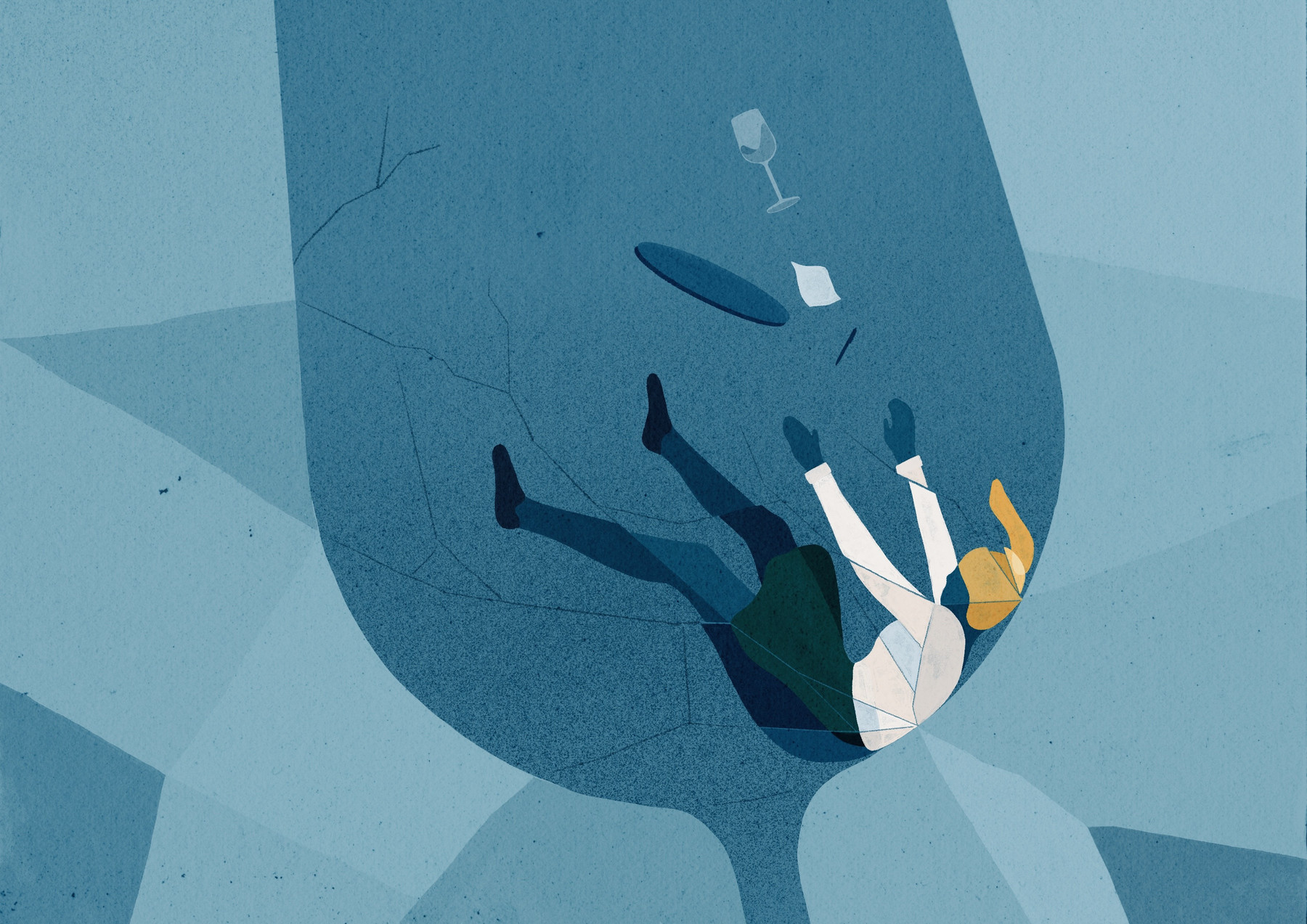
There is a place inside of myself, where I’ve hidden all of the scars and traumas I’ve gained from a life, as a women, working in the Danish restaurant industry. I haven’t dared reveal them to others, but only a few, close friends, out of fear of being rejected or mocked, in a work environment, where to voice how one feels, what one has experienced or to enforce boundaries, is met with indifference, hostility and ridicule.
Particularly as a woman, it has been near impossible to voice objection or to find solidarity from colleagues or superiors, as the restaurant industry, in its construction, is dominated by patriarchal values, set in a bulletproof, almost militant, hierarchal system, that serves an exclusive club of men, with the rest of us as collateral damage. When I’ve attempted to insert a boundary, my actions have been turned against me, as a “confirmation” that it was I,who was the problem. As if, by speaking of any issues, I, myself, made them come to life.
As with the time where I was working at a natural wine bar in Nørrebro, Copenhagen, where I, by my manager, was reminded that I myself had taken part in all existing »conflicts« in the work place. It occurred in an instance of seeking support, after an erratic male chef had pointed and screamed into my face, if I was »completely sick in the head«. This had been his response to my inquiry of whether I should purchase more bread for service or not. Something which no less played out in front of my two male managers, whom of which no one stepped in. One of many examples of my experience of a fundamental perspective, prevalent in the industry, where it is those who address abuse, who become the problem, instead of the actual abusers, the neglectful management or the systemic culture of sexism and violence. In other words, a culture of silence, violence and, effectively, victim blaming.
To be raised and to grow up in a work culture, where testimonies of abuse, as a premise, are considered to be untrustworthy, is impossible to not internalise. Because who wouldn’t like, after having been subjected to assault, to also endure comments of how unreliable one is? How it’s all just for attention. Or that one was asking for it. Or how it’s just because someone is »old school«. Or because it’s just »office banter« and we need to move fast so don’t be so sensitive. Women are also just so hyper reactive to infringement. Or how they know the guy and that they’ve never experienced that he a, b or c. And. So. On.
Since I at 14 held my first job as a dishwasher at Henne Kirkeby Kro in West Jutland, I’ve been a part of the Danish restaurant industry. From cafés to wine bars to restaurants, with and without Michelin stars, as runner, waiter and wine responsible, as part- and full time. I remember how I, in my first waiter job as an adult, working in one of Copenhagen’s largest restaurant chains, initially found the looser social constellations to be liberating. How I found camaraderie with the people with whom I worked, because they were free-spirited and colourful, with social and outgoing personalities, like myself. The lines of what was privately social and professionally social were quickly blurred. The work made me feel that my personality was my most valued asset and, naively, I let myself seduce by the adrenaline, which a job in a turbulent, non-stop work environment offered.
My work in the industry, then and there, became a lifestyle. The norm would be shifts of 12-13-14 hours, with only one, brief break. After work, when we would finally punch out at 1 or 2 in the morning, no one would be able to come down from from tension of the day’s shift and the high levels of stress hormone, which had been what had carried us all through the strain of a whole day of highly charged work. We drank a lot. We barely slept. I remember how I, for a period, because I was making so many tips, used to take a cab to work just so that I could sleep in a bit longer. And how I, even though I only lived 20 minutes on bike from my workplace, once stayed at a hotel across the road from where I worked, because the amount of time between the end of one shift and the beginning of the next was so short, that I couldn't overcome wasting any time on the journey of travelling home and back again. We often worked with a hangover. We rarely called in sick because it was frowned upon. We were always willing to work overtime and earn more points in a game of self-sacrifice. Gradually, the consequences of my newfound, extreme lifestyle began to manifest itself as a constant and underlying anxiety. As social isolation from family and friends. As an overconsumption of alcohol. And even though I myself became aware of how the circumstances of my life slowly started to disintegrate and rot, it simultaneously felt, as with many a dysfunctional relationship, increasingly difficult to find a way out because my social life and dependence had become so anchored in my work. As if the trap had shut. As a type of Stockholm syndrome, I developed an emotional attachment to the restaurateurs and an industry, which exploited and isolated me.
Since the get go, work for me has equalled fear. Fear of saying no and oppose in situations of transgression and abuse. Fear of sharing with others that one wanted to say no but couldn’t. Fear of resigning. Fear of not resigning. Fear of speaking openly about a former workplace's violent work structures after finally having resigned. Fear of applying for a new job in the restaurant industry. Fear of being exploited yet again. Fear that it's just more of the same shit. Fear of being socially and professionally ostracised. Fear of failing oneself. Fear of never finding a safe workplace again. Fear of superiors. Fear of men.
The first job, in which I remember becoming aware of the many precautions I, as a woman, had to take in the everyday life of my job, in order to avoid being subjected to sexualised harassment and abuse, was when I was 21 years old and picked up work at a newly opened restaurant in Kødbyen in Copenhagen. Here, the male head chef and co-owner subjected me to sexually transgressive remarks on a daily, from the time I got in, until the time I got off. Since we worked in an open kitchen, the serving area and kitchen were not separated and, alas, it would be part of my daily routine as I prepared for service, to systematically be questioned by the head chef about my sex life, my sexual preferences, as well as receiving comments about my appearance and what I was wearing. »Which of the lads from the kitchen would you rather fuck?«, »are you into 69’ers?«, »when was the last time you had sex?«, »why are you in such a good mood? Did you get laid last night?«
At one point in which I was walking through a narrow passage in the waiter bar, the head chef made use of the opportunity to pass me simultaneously, pressing his crotch against my body. In another situation, where I had been given the night off because the restaurant was less busy than expected, the head chef sneaked up on me, as I stood in the dimly lit basement, changing out of my uniform. Here, while I had my waiter’s shirt pulled over my head, he walked up to me, eyed my body up and down and asked whether I thought that I had »deserved to have been let off early?« I froze. I’ll late forget the panic I was gripped by in that moment. I thought »this it it. This is where he rapes me«. Eventually, the harassment and its consequences saturated my life and violently occupied my mind at all times. It became difficult for me to concentrate on anything else, leaving me awake at night, where the new violations of the day were added to the chronic anxiety and the growing depression, which I was developing from the abuse. The assaults took control of every way in which I expressed myself, resulting in spending hours before each day of work, strategically picking out the clothes and an appearance that I hoped would give rise to the least, further violations.
As a type of Stockholm syndrome, I developed an emotional attachment to the restaurateurs and an industry, which exploited and isolated me.
When I think back to the young person I was, and the suffering which I was put through, I think of how little aid I was given, although I, no less than twice, directly and desperately asked my male restaurant manager for assistance. We even once met privately outside of work to discuss the pattern of harassment, that the head chef forced upon me, at which point I in detail reported about the mounting violations. Little did it matter. I was on my own. I recall, after a particularly bad rundown during service, where I stood in a corner and struggled to hold back the tears before I, once again, had to step into the restaurant and attend to guests, that a chef slipped a bowl of soft serve, looking at me with a momentary glimpse of compassion. Everyone bore witness to what I went through. No one did anything. The abuse lasted for about five months before I fled the country and settled in the United States for a few months. As a survival mechanism, just to escape it all. Now, nine years later, I still often think about it. Today, my offender has become a kind of TV darling, where he often, on nationwide television, pampers and cooks for morning telly hosts, as well as participating as a judge in broadcast cooking competitions.
I have tried a multiple of times to receive sexualising messages from male guests - strangers really - who succeeded in finding me privately on Facebook, after I had served them at work. Here, they would share their transgressive and perverse notions about me as a private person. On a regular I would be exposed to unwanted physical approaches from male guests, who allowed themself entrance into my work areas, as for instance behind a bar, to either embrace me or feel me up on or under my uniform. I have tried to serve several larger parties consisting exclusively of men, where, as a given in the party’s hyper masculine setup, it was to be expected that I, as a woman serving them, was to expect be groped, objectified via comments about my appearance and my body, and to be "praised" for my knowledge of wine with the phrase »for a woman…«. I cannot give an estimate of the number of guests, which I’ve served over the years, nor the amount of sexist and sexually abusive behaviour, which I have endured. What I can say is: as much as it was everyday for me to serve guests in my job, as much was it an everyday occurrence to be exposed to sexism and violations in my job.
Many other experiences with the particularly sexist culture of the restaurant industry, are more subtle, existing in and upheld by subliminal messaging and microaggressions. Be it when guests, by default, look straight through me, consulting my male colleague for advice on wine, despite the fact that I was the one serving them and the fact that it was I, who was the wine manager. Or that male managers and external professionals in the industry (e.g., suppliers, wine importers, or people from other restaurants) insist on greeting me and other women employees by hugging, whilst shaking hands with peers who are men. Or like when male colleagues are addressed by their first name, whereas I and other women are addressed by »honey«, »darling,« »my girl,« or something fourthly derogatory. When sexism and abuse become and are everyday matters, and when there in turn is no norm or structure in place to protect those who are violated, the violence becomes limitless and systematic.
When I again returned to Copenhagen, I once more took a job in a restaurant. This time, at a high-profile wine bar and Michelin-starred restaurant in the neighbourhood of Nørrebro. The work culture which I would become a part of in the 2.5 years that followed, would prove to be my gateway to understanding the industry as a complex hierarchy of power across nation borders. It was here that I became aware of how systematic exploitation of unpaid labor is justified as an exchange of experience mentality, only further scrutiny-obscured by its French definition, stagiaire.
I gained insight into how an upper class of restaurants worldwide, all of which exploited unpaid labor, used an internationally distributed list to threaten their stagiaires with blacklisting if they didn’t submit to the circumstances of their exploitative “employment”. How the elite of powerful chefs and restaurateurs in an international sort of brotherhood maintain their status and amoral room of manoeuvre. How non-white and non-ethnic Danish persons were targeted as a special category for further maltreatment by xenophobic and racist standards. How female guests were systematically, sexually objectified via an established messenger system at place in the restaurant, where male waiters would note a particular password on food tickets for male chefs in the kitchen to have an overview of where in the bar or restaurant there would be women who were respectively »hot« or »not«. How the word family was consistently deployed regularly by management across the industry to refer to the all staff, in a manipulative attempt to shift responsibilities from employer to all employees, and, in a self-serving interest, to confuse structured, waged labor with boundless obligations. How the work environment was pervasively marked by a constant and all-encompassing fear of “chef”, the top owner, and his temperamental, often erratic, outbursts of anger. How I had to struggle with the administration to get sick leave for two weeks after I had gained a concussion outside of work. How “chef" in connection to this, passively-aggressively notified me, that he »had not yet seen me with a bicycle helmet.«
Fast forward to March 2019 , at which point I decided to write and publish an open letter, which I shared to both my Facebook and Instagram. It was the first time that I, at least publicly, put words to the structural sexism and gender discrimination, that permeates the entire industry. After my publication, concerning sexist treatment by a high ranking and senior restaurateur, I decided to send the letter to few, selected food journalists, to whom I entrusted my experience in the hope that they could use their platform to shed a brighter light on open ended issues of the Danish restaurant industry. To my disappointment, I only heard back from one, who kindly expressed his indignation of my experience, though nothing more followed. Since, I've been able to follow only a few, sporadic articles about the reality of the abusive and exploitative work culture, which seep through the industry, top-down. Yet, the restaurant industry continues to succeed in its avoidance of deeper moral scrutiny.
And this general tendency of reluctancy to take a closer look at the industry of restaurants, is sustained by the failure of the media, in their utter surrender and fetishisation of the industry and its star top. A special crowd of journalists even have a direct interest in the status quo for the obvious reason that they eat for free at various top shelf restaurants, some even several times a year, when they are invited to so-called rehearsal dinners. Journalists who, otherwise, through their industry knowledge, network and access, could have used their position to uncover the power relations that in fact are harmful to so many. In other words, the Danish media industry contributes to the existing culture of silence, which surrounds the Danish restaurant industry like an iron curtain. They all know very well that all the top Michelin restaurants exploit unpaid labor - yes, even that they depend on it. A loyalty, and the accompanying silence, are only amplified each time they are invited to a rehearsal dinner, give yet another portrait interview to the man topchef (who is already overrepresented) and are asked to judge a cooking competition with the socially reproductive and same, small crowd of top restaurants, contributing to the continued promotion of the patriarchal culture that prevails.
When I myself was approached for a position as a wine columnist for a larger, Danish food magazine, my experience was somewhat similar. Here, I experienced, from the editorial top, to be limited in politicising my contributions to the publication. Despite the fact that the format was defined as a column - that is: subjectively prone content, and that my employment even took place solely because I was a young woman and “insider” in the restaurant business. In practice, my experience was that I was in reality only involved in making it look as if the magazine included an under-represented voice in a field otherwise dominated by middle-aged men. Ultimately, it proved to me how the media industry's apolitical hesitation and tendency to steer clear of the shadow sides of restaurant work. One wouldn’t want to loose one's appetite, right?
When I have openly criticised the working conditions in the Danish restaurant industry, I have been met with a sensationalisation prone interest for stories about named individuals of the more famous kind. And preferably »within the last few years«. Needless to say, that ought not to be a necessity to capture the interest of the media. If I’ve said it once, I’ve said it a million times: sexism, sexualised abuse and exploitation is a structural problem that should be approached as such. And if a limitation period for the given media interest is set to »a few years«, well, then that will only encourage and reward perpetrators and offenders for having been able to keep their deeds in secret. Moreover, in recognising that abuse and exploitation is a structural problem, we know from experience that naming names and fixating on the moral habitus of a few individuals, most often leads to blind scandals running off with all the attention. And such a thing mustn’t happen when the problems far exceed the individual persons through whom they may appear.
No sulphites, but full of abuse, right?
On January 8 of this year, I decided to write and share a public story post to my private Instagram, where I extended an invitation to anyone and everyone, who might like to share their testimony of violence and exploitation in the Danish restaurant industry. Since then, I have been flooded in response. In less than a week, my account's followers have grown by the hundreds, I've received more than 500 unique messages, whose stories span over a wide comb of the many-headed beast of problems, that the work culture in the restaurant industry is.
As of now, in a series titled On the menu, I continue to anonymously share an ever-growing stream of cases of the restaurant industry's structurally violent working conditions. From staff parties where participation is forced and one is pressured to consume huge amounts of alcohol, to sudden layoffs without compensation. From women leaders, who have internalised a patriarchal set of values and demean male staff based on toxic gender stereotypes, to so-called stagiaires who are humiliated by being forced to eat produce that they had binned. From male teachers of future chefs and waiters, who ask women students about their sex lives, to restaurateurs who hire and only pay their staff an unworthy job wage of 37.5 hours, while the actual weekly working time runs as high as 60-70 hours. From male headchefs who, under physical constraint, fixate their women kitchen staff during briefings, to superiors who methodically punish their staff with forcefull strikes with hardened security shoes. From women chef apprentices who are pressured to have sex with their head chef, to top-notch star chefs who verbally assault their employees with racist slur. From male guests who stalking women staff outside their work, to reported cases of violence that are met with indifference both internally in the workplace, and externally at the union office. The above are just excerpts from the avalanche of cases of the structural and all-encompassing culture of misconduct, that is an everyday condition of the restaurant industry.
In particular, a pattern of an extraordinarily successful natural winemaker’s series of assault, rape, harassment and stalking, has recurred. And how his abuse and infringement almost figures as common knowledge in the industry behind doors. The reappearing testimony have effectively revealed how one of the Denmark’s largest natural wine importers, in team play with an influential and high ranking sommelier from a prominent, Danish Michelin restaurant, aware of the winemakers' transgressive and abusive habits during his regular publicity visits to Copenhagen, have tirelessly continued to promote and collaborate with the winemaker. No sulphites, but full of abuse, right?
The restaurant industry is an industry that will not expose itself to the remainder of society. It is we, who welcome you. It's a show. It’s coordinated down to the last ingredient. It's decades of rehearsed choreography. It's ten thousand hours of work, eaten in an instant. It’s an illusion at the cost of our lives.
Bon appétit.